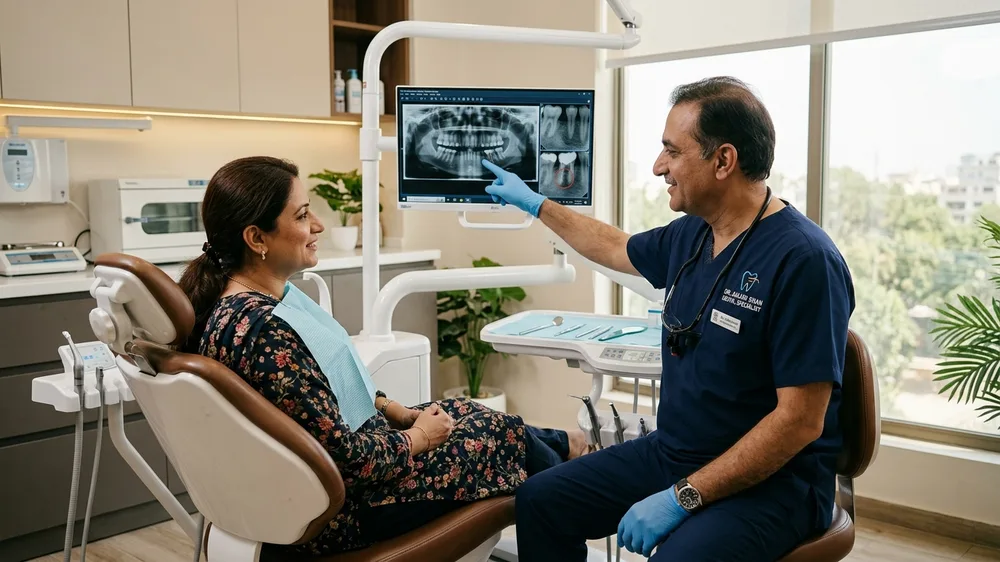
Experiencing unexpected tooth pain after root canal or filling can trigger immediate anxiety, leaving patients wondering whether their dental restoration failed or if their tooth has developed a dangerous secondary infection. Whether you just had a composite resin filling placed on an aching molar or completed rotary endodontic therapy at our DHA Phase 5 dental practice in Karachi, a modest degree of post-operative tissue soreness is a completely normal biological reaction. However, distinguishing between benign ligament healing and acute bacterial infection is essential for preserving your tooth and avoiding dental emergencies.
Mild chewing tenderness and gum sensitivity for 3 to 7 days after a dental filling or root canal is normal as the bruised periodontal ligament heals. However, severe continuous throbbing, facial or gum swelling, a high bite where teeth collide unevenly, or pain persisting beyond 10 days indicates an infection or mechanical overload requiring prompt clinical assessment.
Quick Comparison: Normal Healing vs. Infection Warning Signs
Before panicking about a failed procedure, evaluate your specific symptoms against this clinical diagnostic comparison formulated by Dr. Shahid Islam:
Common Causes of Tooth Pain After Root Canal or Filling Explained
When patients present to our Karachi clinic with post-procedural discomfort, the root cause usually falls into one of five well-defined clinical categories:
1. Occlusal Prematurity ("The High Bite")
By far the most common cause of acute pain when biting down on a fresh filling is a "high spot." Because local anesthesia numbs your jaw, lips, and tongue during treatment, it is difficult to bite down completely naturally when the dentist checks your bite with blue articulating paper. If the new composite restoration is elevated by even 30 to 50 microns (thinner than a human hair), that single tooth takes 100% of your jaw's closing force before any other teeth touch.
This microscopic elevation repeatedly bruises the periodontal ligament (PDL)—the shock-absorbing fibrous hammock anchoring the tooth to the alveolar jawbone. Over 48 hours, this micro-trauma causes severe inflammation known as traumatic periodontitis. The tooth feels exquisitely tender to any chewing pressure. Fortunately, this is entirely mechanical, not an infection: a 2-minute visit to smooth the high spot immediately relieves the strain, and soreness resolves within 24 to 48 hours.
2. Deep Cavities and Reversible Pulpitis
When decay penetrates deep into dentin close to the pulp chamber, the tooth's internal nerve becomes irritated by bacterial toxins and the thermal friction of rotary preparation. In modern aesthetic dentistry, resin adhesives and composite fillings undergo photo-polymerization shrinkage. If the pulp remains vital and healthy, it experiences temporary reversible pulpitis—brief zings of sensitivity to cold ice water or hot tea that vanish within 2 to 3 seconds. Over 2 to 4 weeks, the dental pulp produces reparative tertiary dentin to insulate itself, and sensitivity fades. However, if the nerve was already irreversibly damaged by pre-existing bacterial necrosis, endodontic therapy (root canal treatment) becomes necessary.
3. Periapical Inflammation Following Root Canal Cleaning
Patients often ask: "If my nerve was removed, why do I still have discomfort?" During an endodontic procedure, microscopic rotary nickel-titanium instruments and antiseptic irrigants (such as sodium hypochlorite) cleanse bacteria from complex root canals. Even with the highest clinical precision, mechanical instrumentation and chemical disinfection create temporary inflammation in the periapical bone tissue just beyond the root tip (the apical foramen). While the internal tooth has no sensation, the surrounding jawbone and ligament remain fully innervated. As healing tissues remodel, mild tenderness when chewing or tapping the tooth is normal for up to a week.
4. Complex Anatomy & Missed Accessory Canals
Human molar root anatomy is intricate. For example, upper first molars frequently possess a hidden fourth canal called the MB2 (mesiobuccal 2) canal, which can be narrower than a needle. If an untreated micro-canal harbor residual bacteria, the tooth may continue to ache or throb even after root canal obturation. Utilizing digital high-resolution dental X-rays and apex locators at our DHA Phase 5 facility allows our clinical team to locate and disinfect microscopic canal variations, eliminating lingering infection.
5. Coronal Seal Failure or Hairline Enamel Fractures
A root-treated tooth loses vital moisture over time, making it brittle. If the tooth lacks a protective restoration—such as a custom high-strength dental crown—biting into tough foods like nuts, crusty bread, or bone can cause a microscopic hairline fracture. Similarly, if a temporary filling wears away before the final crown is cemented, oral bacteria from saliva can re-contaminate the clean root canals, causing a flare-up.
Timeline of Healing: What to Expect Day-by-Day (Days 1 to 14)
Understanding the natural biological healing curve helps patients set realistic expectations and eliminates unnecessary panic during post-operative recovery:
Expected Sensation: Dull ache, jaw stiffness, local gum tenderness.
The anesthesia wears off within 2 to 4 hours. You may feel dull tenderness around the tooth and in the surrounding jaw muscle where the local injection was administered. Chewing on this side is uncomfortable. Over-the-counter pain medications like Ibuprofen (Brufen 400mg) or Paracetamol (Panadol 500mg) provide substantial relief.
Expected Sensation: Noticeable improvement, tenderness only on hard pressure.
Spontaneous discomfort should be completely gone. You should no longer require routine analgesics throughout the day. Light chewing on soft foods causes no pain, though biting forcefully on hard nuts or raw vegetables may still produce a brief twinge as bone remodeling finishes around the root apex.
Expected Sensation: The tooth feels identical to your natural teeth.
The treated tooth integrates smoothly into normal chewing function. Thermal sensitivity from a filling should be significantly diminished. For root canal patients, this is the ideal window to return for your permanent core build-up and Zirconia or E-Max dental crown impression to permanently safeguard the tooth from fracture.
5 Red Flag Infection Signs That Demand Urgent Dental Attention
While mild post-operative soreness is expected, you must never ignore active infectious complications. If you encounter any of the following 5 red flag symptoms, contact our Karachi emergency dental line immediately:
Any outward puffiness of the cheek, jawline, upper lip, or floor of the mouth indicates that bacterial infection has spread beyond the tooth apex into facial fascial spaces. Facial cellulitis can progress quickly and requires prescription antibiotic therapy and drainage.
- 2. Severe Nocturnal Throbbing: Pain that awakens you from a sound sleep, feels like a pounding heartbeat in your jaw, or fails to respond to maximum safe doses of analgesics indicates active pressure buildup inside the bone or irreversible pulpal necrosis.
- 3. The "Pimple on the Gums" (Parulis / Gum Boil): A localized white, red, or yellowish bump on the gum adjacent to the treated tooth represents a chronic sinus tract. It periodically vents foul-tasting salty pus, confirming an active periapical abscess.
- 4. Spontaneous Extreme Thermal Lingering: If drinking a glass of water causes intense pain that lingers for 30 to 60 seconds after swallowing, the nerve inside the tooth is experiencing irreversible hyperemic damage requiring root canal intervention.
- 5. Systemic Signs (Fever, Malaise & Trismus): A body temperature above 100°F (37.8°C), swollen tender lymph nodes beneath your jawline, or difficulty opening your mouth wider than two fingers (trismus) requires emergency dental care.
Safe Home Relief Remedies While Awaiting Your Clinic Visit
If you develop post-procedure discomfort in the evening or over the weekend before your appointment in DHA Phase 5, Karachi, follow these evidence-based home care protocols to manage pain safely:
Effective, Safe Relief Strategies:
- Synergistic Over-the-Counter Analgesia: When medically cleared by your physician, alternating Ibuprofen (400mg) with Paracetamol (500mg) every 4 to 6 hours provides superior anti-inflammatory pain control compared to taking either medication alone.
- Warm Saline Mouth Rinses: Dissolve 1/2 teaspoon of table salt in 8 ounces of lukewarm water. Gently swish for 30 seconds after meals to draw out tissue fluid, soothe inflamed gum margins, and maintain clean surgical margins.
- Head Elevation During Sleep: Keep your head elevated with an extra pillow when resting. Laying completely flat increases blood pressure in your head and neck, intensifying throbbing tooth sensations.
- Temporary Masticatory Rest: Chew exclusively on the opposite side of your mouth. Avoid crusty bread, chewy meat, ice cubes, and crunchy snacks that stress the recovering periapical ligament.
Dangerous Myths to Avoid:
Clinical Caution: What NOT To Do
- Never place an aspirin tablet directly against the gum: Acetylsalicylic acid causes severe chemical burns and painful sloughing of gum tissue (aspirin burn) without relieving the internal tooth pain.
- Do not apply undiluted clove oil (Eugenol) carelessly: Pure clove oil can severely burn oral mucosa if applied in high concentrations without clinical cotton pellets.
- Do not take unprescribed leftover antibiotics: Self-medicating with random antibiotics masks symptoms, drives antimicrobial resistance, and will not cure a mechanical high bite or necrotic pulp.
Still Hurting After a Dental Procedure?
Don't suffer in silence. A 5-minute bite adjustment or digital X-ray evaluation by FCPS specialist Dr. Shahid Islam can immediately resolve your pain and safeguard your tooth.
Frequently Asked Questions